 Follow
Summer in Alaska invites us outside. Long days create more time for camping, fishing, road trips, and visits to the public lands that make our state extraordinary. Last summer, an estimated 2.7 million out-of-state visitors traveled to Alaska between May and September, joining residents on the state’s roads, trails, campgrounds, fishing areas, and public lands. Alaska State Parks manages more than 156 park units encompassing about three million acres and welcomes 5.4 million park visits annually, with Alaskans accounting for more than two-thirds of those visits.
With so many residents and travelers enjoying Alaska’s outdoors, preventing litter is an essential part of protecting the places that make summer here so special. A bottle forgotten beside a campsite, fishing line left along a shoreline, or food packaging blown from a picnic area can remain in the environment long after a trip ends.
Throughout July, here at ALPAR we focused on a straightforward message. Enjoying Alaska and caring for it should be part of the same experience.
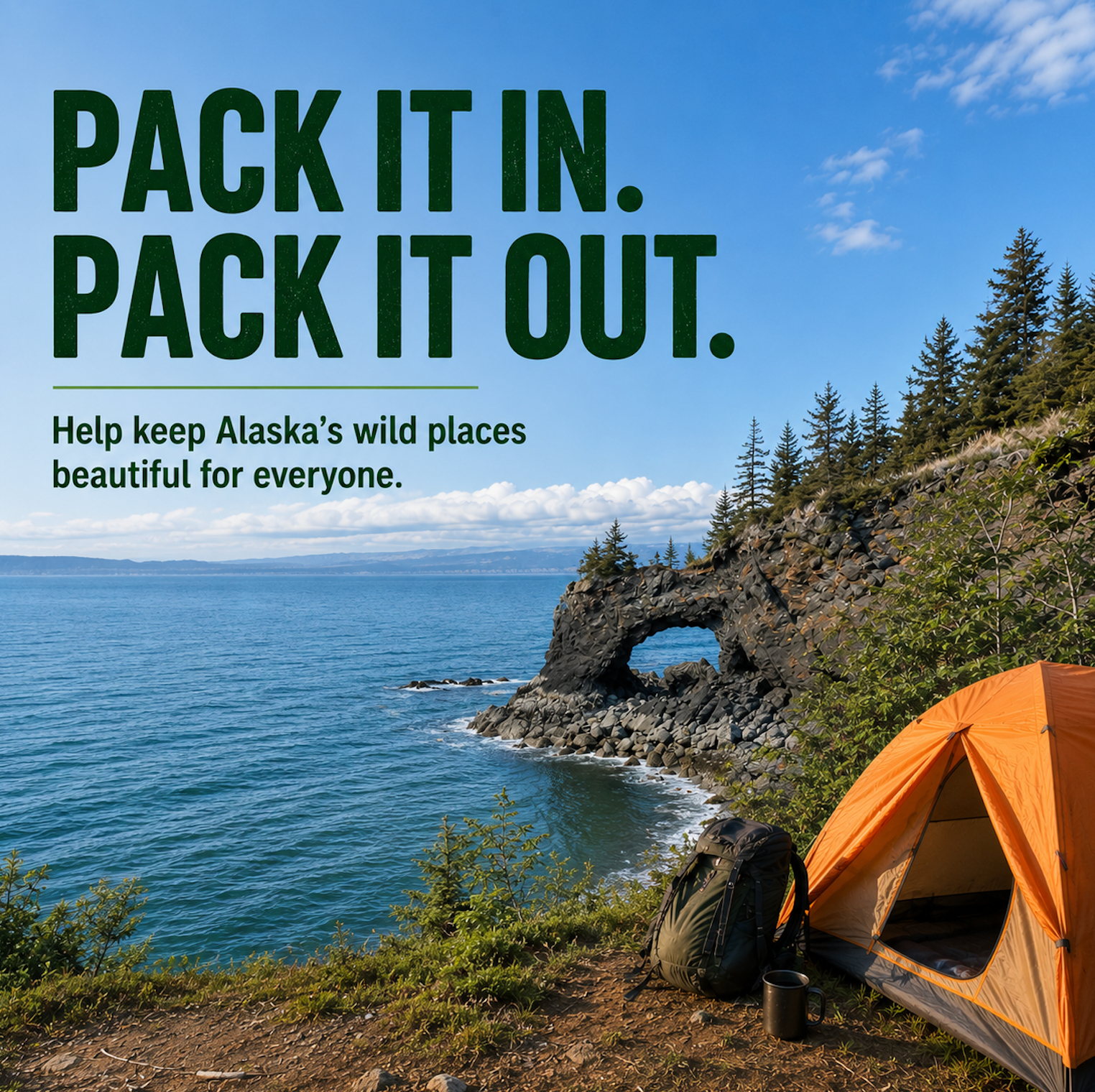
Pack It In. Pack It Out.
“Pack it in, pack it out” is one of the most reliable rules for responsible outdoor recreation. Anything brought to a campsite, trail, fishing area, beach, or public recreation site should leave with you. That includes more than beverage containers and food wrappers, though. Used fishing line, bottle caps, broken equipment, disposable wipes, food scraps, and other small items can easily be overlooked. Even materials that seem harmless can attract wildlife (like bears), spread through wind or water, or remain visible at a site for years.
A little preparation goes a long way:
- Bring a sturdy bag or reusable container for trash.
- Keep recyclables separate when practical.
- Secure lightweight items so they cannot blow away.
- Check your campsite, picnic area, boat, or fishing spot before leaving.
- Pick up litter you encounter when it is safe to do so.
- Learn where materials can be properly recycled or disposed of after your trip.
Never assume that someone else will clean up later. In many of Alaska’s remote and heavily visited areas, getting rid of litter can require significant time, labor, and transportation.
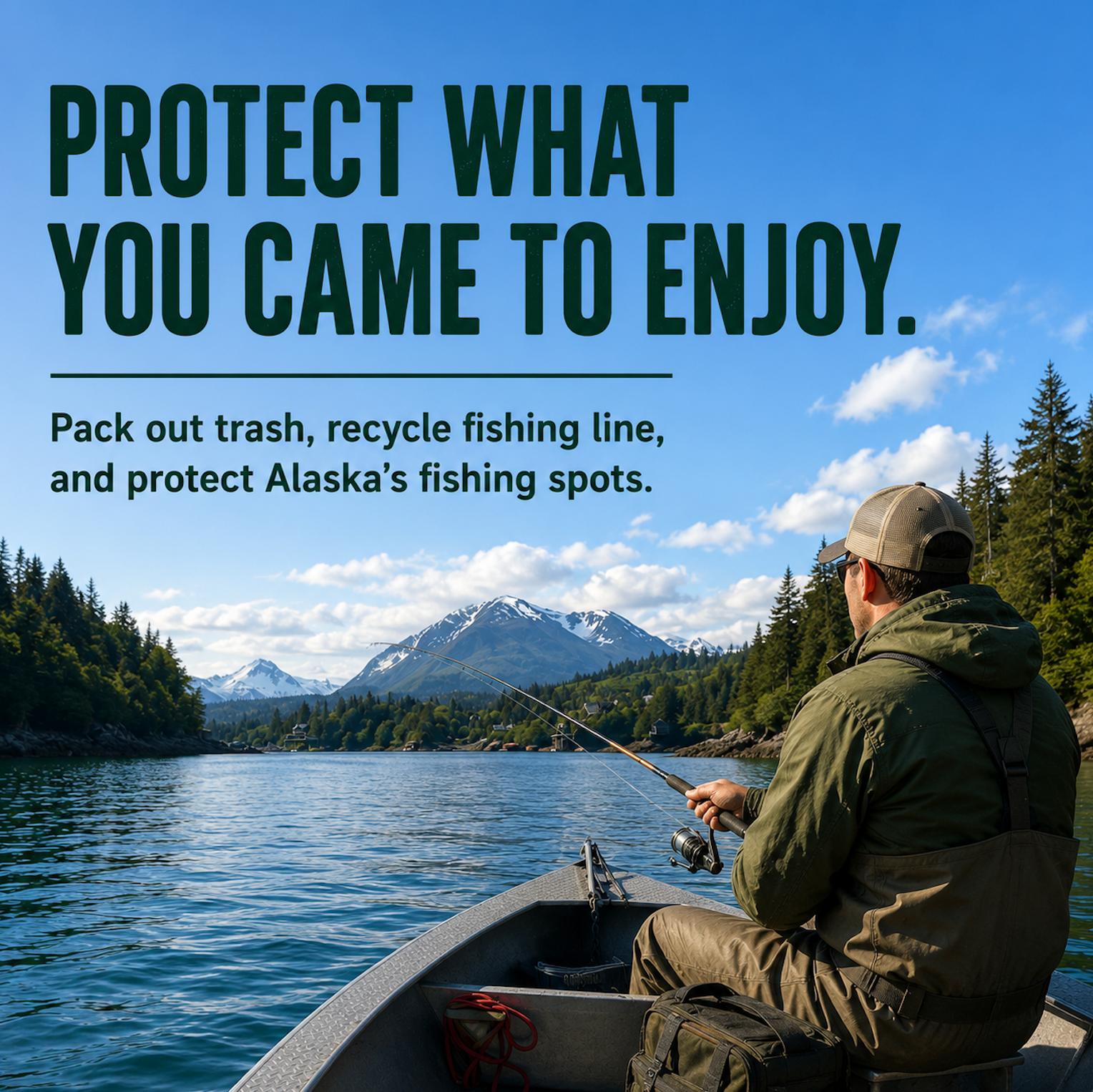
Protect What You Came to Enjoy
Fishing is a treasured part of summer in Alaska, but discarded fishing line can pose a serious and long-lasting hazard. Nearly invisible once it is left along a shoreline or in the water, monofilament line can entangle birds, fish, and other wildlife. Abandoned hooks and lead tackle can create additional problems.
For many years, ALPAR has provided litter bags to support the Anchorage Waterways Council’s broader cleanup work. The Council also tackles fishing-related litter through a monofilament recycling program that began in 2015 with collection bins at 21 popular fishing locations. The program later received support to replace and expand bins throughout Anchorage, including at fishing areas on Joint Base Elmendorf-Richardson. The Council also educates anglers about non-lead tackle and the dangers that discarded line, hooks, and lead weights can pose to wildlife.
Anglers can help by:
- Retrieving snagged or broken line whenever possible.
- Picking up discarded line found near the water.
- Using designated monofilament recycling bins.
- Packing out line when no collection bin is available.
- Considering non-lead tackle.
- Making sure hooks, weights, and other gear are stored and discarded safely.
Fishing line can remain in the environment for centuries. Packing it out protects the wildlife and waterways that make fishing possible in the first place.
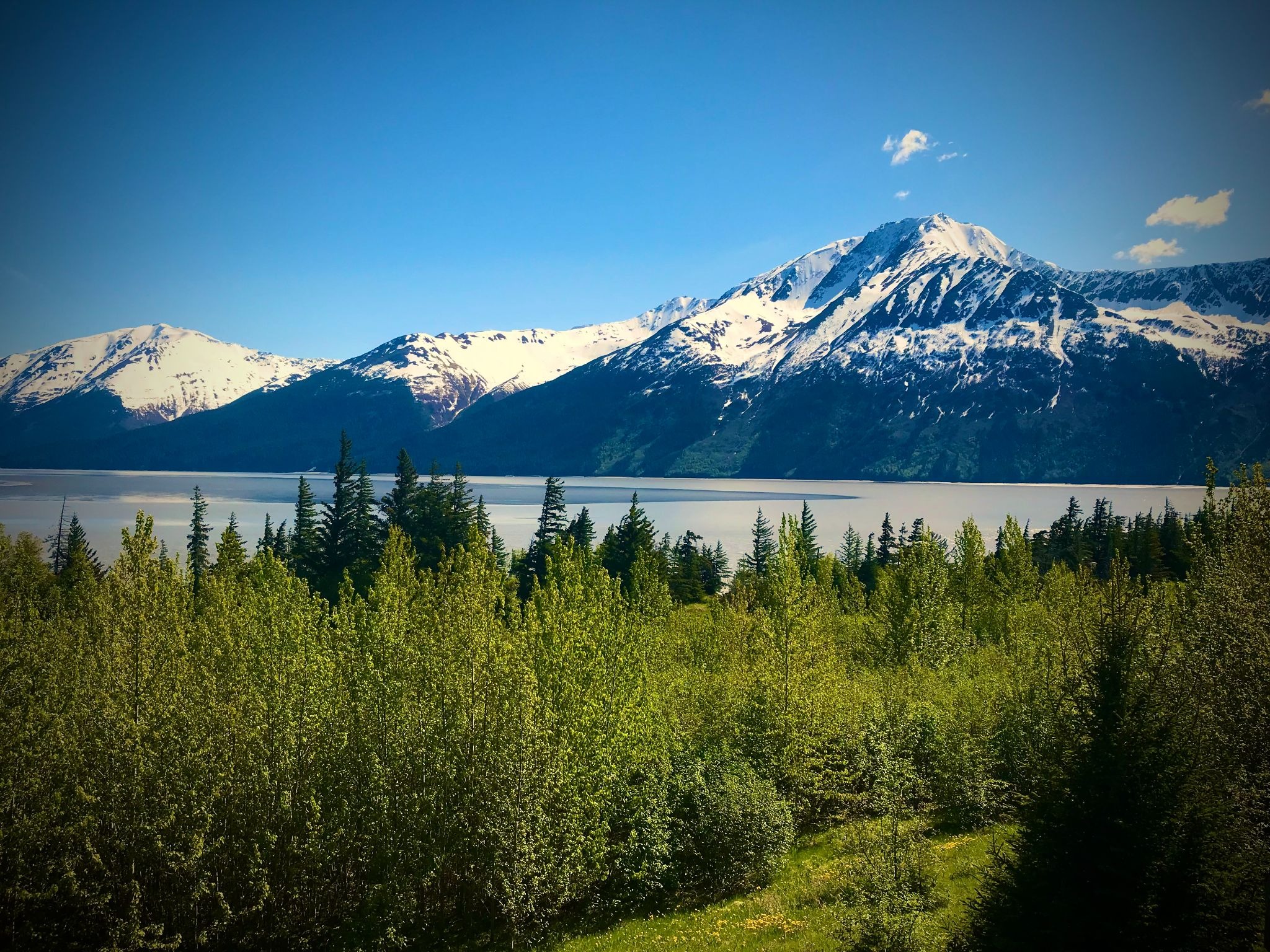
The People Behind Alaska’s State Parks
In July, we also recognized Alaska State Parks, which oversees more than 150 park units encompassing approximately three million acres of land and water. These parks include trails, campgrounds, recreation areas, marine parks, historic sites, public-use cabins, and many other places where residents and visitors experience Alaska’s outdoors.
Clean, welcoming parks don’t just happen on their own, especially in Alaska. Staff members work throughout the year to maintain facilities, manage natural and cultural resources, and support safe public access. Our state parks also depend on volunteers to provide services that would not otherwise be available. Campground hosts are one important part of that effort. These volunteers live on-site for part of the season and serve as representatives of Alaska State Parks. They welcome campers, answer questions, explain park facilities and regulations, and assist with day-to-day maintenance, including litter pickup, light repairs, and janitorial work.
Their work is a reminder that behind every clean campground and recreation area is a team of people investing time and energy in that place. Visitors can and should support their efforts by following park rules, disposing of waste properly, staying on designated trails, and leaving campsites ready for the next person.
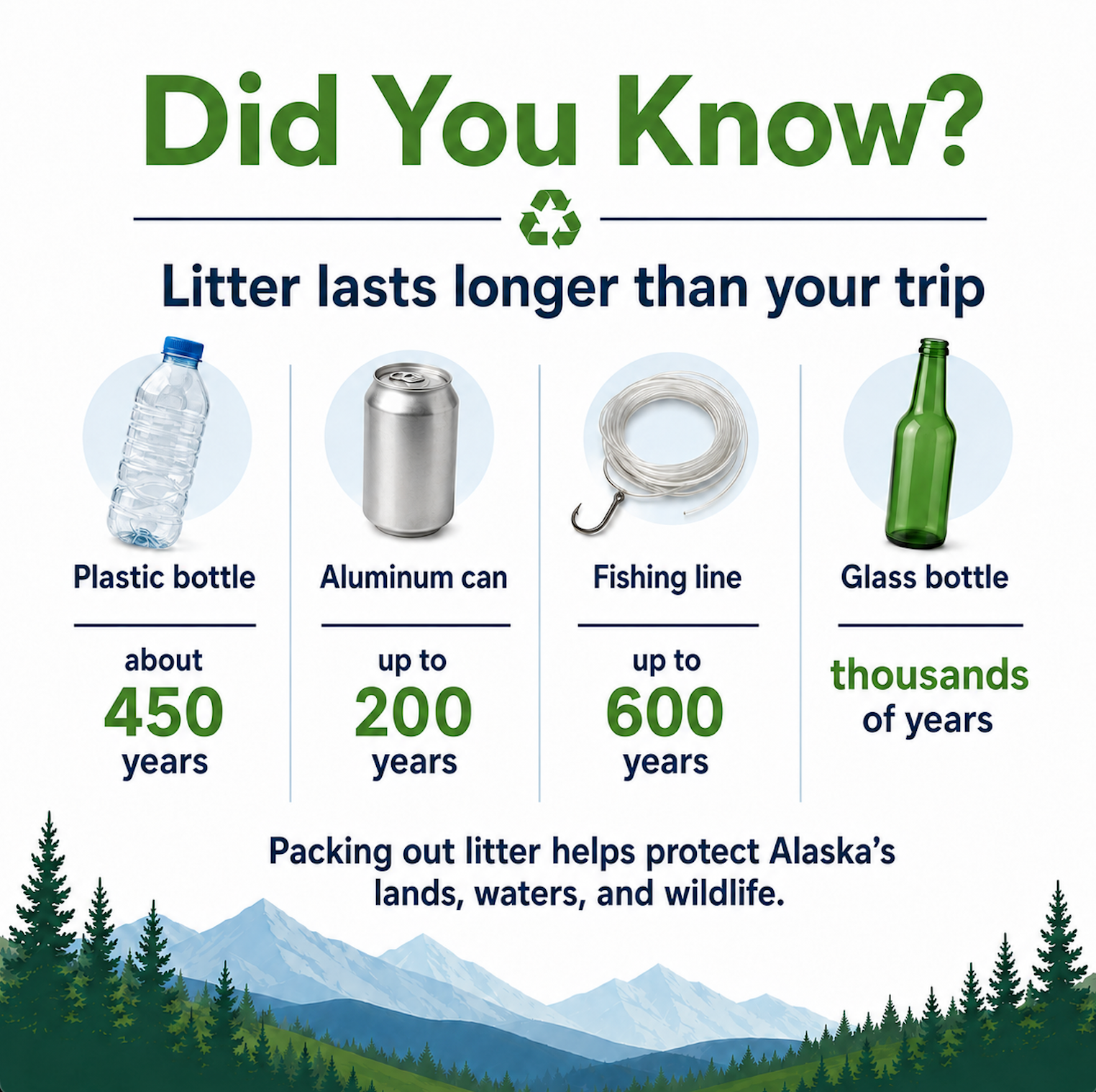
Litter Lasts Longer Than Your Trip
Much litter remains in the environment far longer than people realize. Exact decomposition times vary according to climate, sunlight, moisture, soil conditions, and other factors, but commonly cited estimates include:
- Plastic bottle: about 450 years
- Aluminum can: 80 to 200 years
- Monofilament fishing line: up to 600 years
- Glass bottle: thousands of years or longer
These are estimates rather than precise expiration dates, but they illustrate why litter prevention matters. Plastic has a tendency to break into increasingly small fragments rather than truly disappearing, while glass and metal can remain intact for extremely long periods. Besides being an appearance problem, debris can entangle wildlife, be mistaken for food, travel into waterways, and create hazards for people and animals. Lost or abandoned fishing gear is especially dangerous because it can continue trapping wildlife after it has been discarded.
Make Stewardship Part of Every Trip
Responsible recreation doesn’t require complicated equipment or a major cleanup project. It begins by planning for everything you bring outdoors and making sure it returns with you. Before leaving home, think about where you will store trash, whether recycling is available at your destination, and how you will secure waste during travel. Before leaving a site, take one final look around. Check beneath picnic tables, beside fire rings, near the shoreline, and around vehicles or boats for anything that may have been missed.
Alaska’s wilderness gives us extraordinary places to explore. Caring for them is part of being there. Wherever the rest of your summer takes you, remember to pack it in, pack it out, and protect what you came to enjoy!